
Are you struggling to increase your website’s visibility on search engines? Look no further than SEO. Search Engine Optimization, or SEO for short, is the practice of optimizing your website in order to rank higher on search engine results pages (SERPs). By incorporating SEO into your digital marketing strategy, you can drive more organic traffic to your website and ultimately improve your business’s bottom line.
Understanding the basics of SEO is crucial in today’s digital landscape. This article will break down how SEO works, the different types of SEO, and the importance of implementing white hat tactics. Additionally, we’ll explore how SEO ties into broader digital marketing strategies and discuss key success factors to consider when optimizing your site for search engines. So let’s dive in and start boosting your online presence with effective SEO practices!
Key Takeaways
SEO involves optimizing a website to rank higher on SERPs and drive more organic traffic to a website.
There are three types of SEO: on-page, off-page, and technical.
Local SEO focuses on optimizing a website and online presence for location-based searches.
SEO success factors include keyword research, quality content creation, technical optimization, and link building.
SEO Basics
Understanding the basics of SEO, such as keyword research and on-page optimization, is essential for improving your website’s visibility and attracting organic traffic. Keyword research involves finding the words and phrases that people commonly use to search for specific topics online. By incorporating these keywords into your website’s content, you increase your chances of ranking higher in search engine results pages (SERPs).
On-page optimization refers to making sure that your website’s content is structured in a way that is easy for search engines to understand. This includes optimizing titles and meta descriptions, using header tags appropriately, and ensuring that your website has a clear hierarchy of information. By following these best practices, you can make it easier for search engines to crawl and index your site.
By mastering the basics of SEO, you can create a strong foundation for building an effective digital marketing strategy. Understanding how SEO works can help you identify opportunities to improve your website’s performance and attract more visitors. In the next section, we’ll dive deeper into how search engines evaluate websites and determine rankings based on various factors like relevance, authority, user experience, and more.

How SEO Works
To grasp the mechanics of how search engines operate, it’s important to know that they use complex algorithms to analyze and rank websites based on various factors such as relevance, authority, and user experience. Here are three key ways in which SEO works:
- Crawling: Search engine bots crawl through millions of web pages every day, analyzing the content for keywords and other ranking factors.
- Indexing: Once a page has been crawled, it is added to the search engine’s index – essentially a vast database of all known web pages.
- Ranking: When someone enters a query into the search engine, it uses its algorithm to determine which pages from its index are most likely to provide the best answer.
As you can see, SEO involves a lot more than simply stuffing your website with keywords. It requires an understanding of how search engines work and what they look for when ranking websites. So if you want your site to appear at the top of search results, you need to focus on creating high-quality content that meets these criteria.
And speaking of meeting criteria, now that you understand how SEO works at a basic level, let’s dive deeper into different types of SEO strategies that can help boost your website’s visibility even further.
Types of SEO
Get ready to explore a variety of tactics that’ll amplify your online presence and make you stand out from the crowd. There are three types of SEO: on-page, off-page, and technical. Each type has its own set of strategies that can help increase your website’s visibility in search engine results pages (SERPs).
On-page optimization involves optimizing individual web pages with relevant keywords in titles, headings, content, meta descriptions, and URLs. It also includes ensuring that the page is mobile-friendly, loads quickly, and has a good user experience. By optimizing your on-page elements correctly, you can improve your website’s ranking for specific keywords.
Off-page optimization refers to activities outside of your website that can impact your rankings. This includes link building through guest blogging or outreach campaigns to other websites. Social media engagement and online reviews also play a role in off-page optimization since they demonstrate credibility and establish authority in your industry.
Now that you’ve learned about the different types of SEO tactics available to you, let’s dive deeper into on-page optimization. By focusing on this aspect first before moving onto off-page or technical SEO strategies later down the line – such as improving site speed or fixing broken links – you’ll be able to build a solid foundation for future growth!
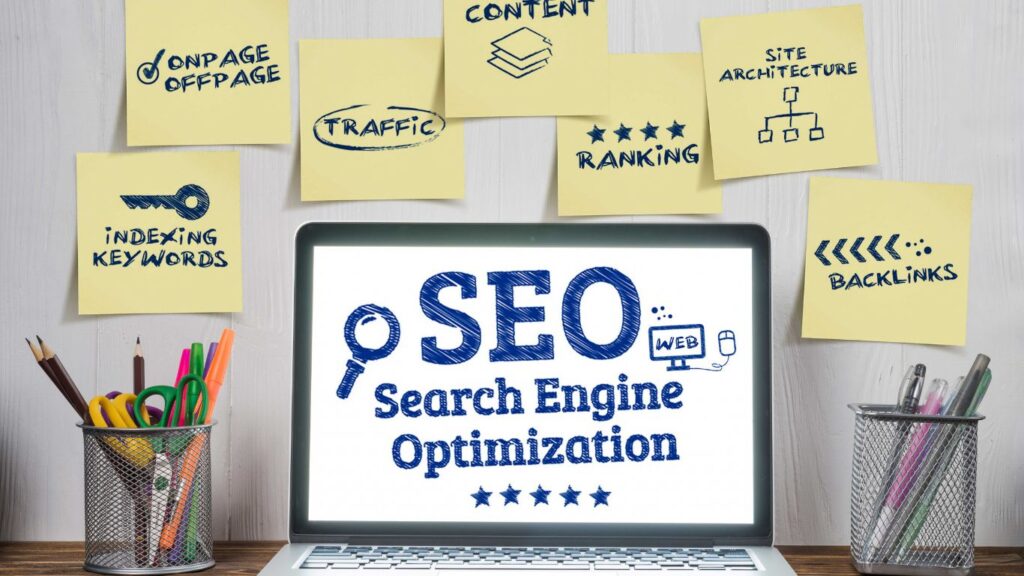
On-Page Optimization
Start optimizing your website’s individual web pages with relevant keywords in titles, headings, content, meta descriptions, and URLs to improve their visibility in search engine results pages! On-page optimization is the process of making sure that each page on your website is optimized for search engines. This means that you need to ensure that every element on your page is optimized so that it ranks higher in search engine results.
One of the most important elements of on-page optimization is keyword research. You need to identify the keywords and phrases that are relevant to your business and incorporate them into your content. This will help search engines understand what your page is about and rank it accordingly. You also need to make sure that your title tags, meta descriptions, headings, and URL structure all include these keywords.
In addition to incorporating keywords into your content, you should also focus on providing high-quality content that offers value to users. This means creating engaging copy that answers their questions or solves their problems. By doing this, you’ll not only improve user experience but also increase the likelihood of other websites linking back to your site – a crucial factor for off-page optimization.
Off-page optimization involves activities outside of your website such as link building and social media marketing. These activities help build authority for your website which ultimately helps improve its rankings in search engine results pages. So now let’s take a closer look at how off-page optimization can help boost traffic to your site!
Off-Page Optimization
You may be wondering how you can improve your website’s visibility beyond just on-page optimization. The answer lies in off-page optimization, which involves activities that take place outside of your website but still impact its ranking. One way to improve off-page SEO is through link building, where you acquire links from other websites pointing back to yours.
Here is a table outlining some important factors to consider when building links for off-page optimization:
Factor | Description |
Relevance | Links from relevant websites carry more weight and authority |
Authority | Links from high authority websites have greater impact on your ranking |
Diversity | A diverse range of linking domains and anchor text help avoid penalties |
Quality | High-quality links are those that come from reputable sources and are contextually relevant |
Quantity | While quality is important, quantity also plays a role in improving ranking |
In addition to link building, other off-page optimization techniques include social media marketing, influencer outreach, and guest blogging. These activities can help increase brand exposure, drive traffic to your site, and boost search engine rankings.
As you can see, there are many ways to improve off-page optimization. By focusing on link building and incorporating other strategies into your overall SEO plan, you can improve the visibility of your website in search engine results pages (SERPs). In the next section about local SEO, we will explore how targeting specific geographic areas can further enhance your online presence.
Local SEO
If you want to increase your business’s visibility to local customers, targeting specific geographic areas through local SEO is a must. Local SEO focuses on optimizing your website and online presence for location-based searches. With the rise of mobile devices and voice search, more and more people are searching for businesses near them, making it crucial to have a strong local SEO strategy.
To improve your local SEO, start by creating a Google My Business page. This free tool allows you to manage how your business appears in Google search results and maps. Make sure all of your information is accurate and up-to-date, including your address, phone number, hours of operation, and photos. Encourage customers to leave reviews on your Google My Business page as well – positive reviews can help boost your ranking in local search results.
In addition to optimizing for Google My Business, make sure your website is optimized for location-based keywords. Include city or region-specific keywords in title tags, meta descriptions, headers, content, and URLs where appropriate. Building high-quality backlinks from other local websites can also boost your local SEO efforts. Don’t forget about social media either – maintaining an active presence on platforms like Facebook and Instagram can help you connect with potential customers in your area.
Transitioning into technical SEO: While focusing on off-page optimization like building backlinks can be effective for improving overall search engine rankings, technical SEO is essential for ensuring that search engines can crawl and index your site correctly.
Technical SEO
Optimizing your website for technical SEO is crucial to ensure that search engines can properly crawl and index your site, ultimately improving your overall search engine rankings. Technical SEO involves optimizing your website’s infrastructure and code to make it more accessible and user-friendly for both search engines and users.
One important aspect of technical SEO is website speed. A slow-loading website can lead to a poor user experience, which in turn can negatively impact your search engine rankings. According to Google, the ideal loading time for a page should be under three seconds. To improve your website’s speed, you can compress images, minify code, and reduce the number of HTTP requests.
Another key component of technical SEO is mobile-friendliness. With more than 50% of internet traffic now coming from mobile devices, it’s essential that your website is optimized for mobile users. This means ensuring that your site has a responsive design, fast load times on mobile devices, and easy-to-use navigation on small screens.
Optimizing your website for technical SEO can go a long way in improving its visibility on search engines. By following the above checklist and implementing best practices for website speed and mobile-friendliness, you’ll be well on your way to achieving higher rankings in search results pages.
As you continue to optimize your website’s technical aspects, it may also be beneficial to utilize various tools designed specifically for SEO purposes. These tools can help identify issues with your site’s structure or content that may be hindering its performance on search engines. In the next section we will explore some popular SEO tools you can use to gain insights into how well your site is performing from an optimization standpoint.
SEO Tools
Get great Google rankings by grabbing grand insights with groovy SEO tools. These tools can help you analyze your website’s performance, identify technical issues that may be affecting your search engine rankings, and track important metrics such as keyword rankings and backlinks. Here are four of the best SEO tools to help you get started:
- Google Analytics – This free tool from Google provides a wealth of information about your website’s traffic, including where it comes from, how long people stay on your site, and which pages they visit most often.
- SEMrush – SEMrush is an all-in-one marketing toolkit that includes tools for keyword research, competitor analysis, site auditing, and more. It also provides valuable insights into your competitors’ online marketing strategies.
- Ahrefs – Ahrefs is a powerful backlink analysis tool that can help you identify high-quality backlink opportunities for your website. It also provides detailed data on keywords and their search volume.
- Moz Pro – Moz Pro is a suite of SEO tools that includes everything from keyword research to site auditing to rank tracking. It also offers helpful features like link building suggestions and on-page optimization recommendations.
Using these SEO tools can give you a competitive advantage in the search engine results pages (SERPs). But simply using these tools isn’t enough – you need to use them strategically as part of a comprehensive SEO marketing strategy that includes content creation, link building, social media promotion, and more. In the next section we’ll explore some key elements of an effective SEO marketing strategy.
SEO Marketing Strategy
Now that you have a good grasp of the various SEO tools at your disposal, it’s time to put them into action and develop an effective SEO marketing strategy. This will involve identifying your target audience, researching relevant keywords and optimizing your content accordingly.
To start, you’ll need to define your target audience – who are they and what kind of content do they respond to? Use data from tools like Google Analytics or social media insights to gain a better understanding of their interests and preferences. Once you have this information, you can tailor your content to meet their needs and improve engagement.
Next, conduct thorough keyword research using tools like Google Keyword Planner or SEMrush. Identify high-volume, low-competition keywords that are relevant to your business and incorporate them strategically into your content. Remember not to overstuff with keywords as this can hurt rather than help your rankings.
With a solid understanding of your target audience and optimized content in hand, it’s time to execute on an effective SEO marketing strategy. By consistently producing quality content that resonates with your audience while incorporating targeted keywords, you’ll be well on your way towards improving search engine rankings and driving more traffic to your site.
As we move onto discussing SEO and SEM in the next section, it’s important to note that these two strategies work together in tandem for optimal results. So let’s dive deeper into how they can complement each other for even greater success.

SEO and SEM
Combining search engine marketing with organic search strategies can result in a more comprehensive approach to boosting online visibility and driving traffic to your website. Search engine optimization (SEO) focuses on optimizing your website’s content and structure to rank higher in organic search results, while search engine marketing (SEM) involves paid advertising campaigns that appear at the top of search results pages.
To fully leverage both SEO and SEM, it’s important to understand how they work together. By targeting specific keywords through PPC ads, you can drive traffic to your site while working on long-term SEO strategies that will improve your organic rankings over time. Additionally, by analyzing data from both sources, you can identify which keywords are most effective for driving conversions and adjust your strategy accordingly.
It’s important to note that while combining SEO and SEM can be highly effective, it requires careful planning and execution. It’s easy to overspend on PPC ads or neglect long-term SEO efforts in favor of short-term gains. By creating a balanced strategy that takes into account both immediate needs and long-term goals, you can achieve sustainable growth for your business.
Transitioning into the subsequent section about ‘black hat seo’, it’s worth noting that some marketers try to take shortcuts by using unethical tactics like keyword stuffing or buying links. These black hat SEO practices may seem tempting for quick results but ultimately harm your website’s reputation with search engines. To build a strong online presence, focus on creating high-quality content that provides value for users while following ethical SEO techniques.
Black Hat SEO
Using unethical tactics like keyword stuffing or buying links, also known as black hat SEO, may seem tempting for quick results, but they ultimately harm your website’s reputation with search engines and could lead to penalties. Search engines have become smarter in detecting these practices and can penalize websites by lowering their rankings or even removing them from their index altogether. Black hat techniques are often used by spammers who prioritize short-term gains over long-term success.
To understand the dangers of black hat SEO, let’s take a look at this table:
Tactics | Description | Risks |
Keyword Stuffing | Overloading content with irrelevant keywords to manipulate search engine rankings. | Penalized by search engines; negative user experience due to poor quality content. |
Paid Links | Buying links from low-quality sites to increase backlinks and improve rankings. | Penalized by search engines; risk of being associated with spammy websites; loss of credibility among users. |
Cloaking | Serving different content to users and search engines to rank for certain keywords while hiding it from users. | Penalized by search engines; negative user experience due to deception; potential legal issues if caught. |
As you can see, these tactics not only violate ethical standards but also pose significant risks that could harm your website’s visibility and reputation in the long run. Instead of relying on black hat techniques, focus on white hat SEO strategies that prioritize creating quality content and building natural links through outreach efforts.
Transition: While black hat SEO may provide quick results, it could ultimately harm your website’s online presence in the long term. In the next section, we’ll explore ethical ways to improve your website’s visibility using white hat SEO techniques.
White Hat SEO
By following ethical and sustainable practices, you can cultivate a strong online presence for your website with white hat SEO techniques. Unlike black hat SEO, which involves manipulating search engines through shady tactics like keyword stuffing and link schemes, white hat SEO is all about creating valuable content and improving user experience. With white hat SEO, the focus is on building long-term success rather than quick fixes that could get your site penalized or banned.
One of the most effective strategies for white hat SEO is to optimize your website’s content with relevant keywords. By conducting thorough keyword research and strategically incorporating those keywords into your website’s pages, you can improve your visibility in search engine results pages (SERPs). However, it’s important to use keywords in a natural way that doesn’t compromise the quality of your content. Keyword stuffing can be detrimental to not only user experience but also your search rankings.
Another key component of white hat SEO is link building. Instead of buying links or participating in link schemes that violate Google’s guidelines, focus on earning high-quality backlinks from reputable websites within your industry. This can be achieved through guest blogging, creating shareable infographics or other types of visual content, and networking with other bloggers and influencers in your niche. By building strong relationships with others in your industry and providing value through your content, you can naturally attract backlinks that boost both traffic and authority.
By implementing these best practices for white hat SEO, you’re setting yourself up for long-term success online. But optimizing your website for search engines isn’t enough – it’s just one piece of the digital marketing puzzle. In order to truly stand out from competitors online and connect with potential customers on a deeper level, you’ll need to incorporate various other strategies such as social media marketing and email marketing into your overall digital marketing strategy.
SEO and Digital Marketing
Now that you have a better understanding of White Hat SEO, let’s explore how it fits into the broader world of digital marketing. In today’s fast-paced business landscape, having a strong online presence is essential for success. This means not only creating a well-designed website but also ensuring that potential customers can find it through search engines like Google.
To achieve this, businesses must implement effective SEO strategies as part of their digital marketing efforts. By optimizing your website for search engines, you increase your visibility and attract more targeted traffic to your site. This can lead to higher conversion rates and ultimately drive more revenue for your business.
To ensure the success of your SEO and digital marketing efforts, it’s important to keep up with best practices and industry trends. Here are some key considerations:
- Develop a comprehensive keyword strategy that aligns with your business goals.
- Stay up-to-date on algorithm changes from major search engines like Google.
- Leverage social media platforms to drive traffic and engagement on your website.
- Measure the effectiveness of your SEO efforts through analytics tools such as Google Analytics.
By incorporating these tactics into your overall digital marketing plan, you can maximize the impact of White Hat SEO techniques and achieve long-term success in driving targeted traffic to your website. As we move forward in our exploration of SEO importance, keep these points in mind as they will be crucial to understanding its significance in today’s online ecosystem.
SEO Importance
In today’s digital landscape, having a website that stands out is like finding a needle in a haystack. With millions of businesses vying for attention, it can be difficult to make your mark. This is where SEO comes into play. It’s not just about ranking higher on search engines; it’s about getting your content in front of the right people at the right time.
SEO is important because it helps increase visibility and organic traffic to your website. By optimizing your content with relevant keywords, building quality backlinks, and ensuring your site has a good user experience, you can attract more visitors and ultimately convert them into customers. Plus, with search engines constantly updating their algorithms, staying on top of SEO best practices is crucial for maintaining long-term success.
To achieve SEO success, several factors need to be taken into account. These include keyword research and targeting, quality content creation, technical optimization (such as improving page speed and site structure), and link building through outreach efforts or guest blogging. By focusing on these key areas and regularly monitoring performance metrics like rankings and traffic numbers, you can continually improve your website’s visibility online.
SEO Success Factors
To achieve success in improving your website’s visibility online, you need to take into account several factors such as keyword research and targeting, quality content creation, technical optimization, and link building through outreach efforts or guest blogging.
Here are some important SEO success factors that you should consider:
- Keyword Research and Targeting: Conduct thorough research to identify the keywords that your target audience is searching for. Use tools like Google’s Keyword Planner to find relevant keywords with high search volumes. Incorporate these keywords naturally into your content and metadata.
- Quality Content Creation: Produce informative, engaging, and shareable content that provides value to your audience. Ensure that your content is well-written, visually appealing, and optimized for search engines.
- Technical Optimization: Optimize your website’s structure and coding to make it more accessible to search engine crawlers. This includes improving page load speed, implementing schema markup, optimizing images and videos, using descriptive URLs, etc.
- Link Building: Build high-quality backlinks from reputable websites through outreach efforts or guest blogging. This can help increase your website’s authority and improve its ranking on search engine result pages.
By focusing on these SEO success factors and implementing them effectively on your website, you can improve its visibility online and attract more organic traffic from search engines. Remember that SEO is a long-term game that requires consistent effort over time. So stay patient and keep refining your strategy based on data-driven insights to achieve sustained results.
Conclusion
Congratulations! You have now learned the basics of SEO and how it works. By understanding the different types of SEO, on-page and off-page optimization, and white hat techniques, you can take your digital marketing strategy to the next level.
It’s important to remember that SEO is not a one-time fix, but rather an ongoing process. To achieve success, you must stay up-to-date with industry trends and changes in search algorithms. As the saying goes, “Rome wasn’t built in a day,” and neither is a successful SEO strategy. However, by focusing on key factors such as quality content creation, link building efforts, and technical optimization tactics, you can gradually improve your website’s ranking and drive more traffic to your site.
In conclusion, implementing effective SEO strategies is crucial for any business looking to succeed online. By optimizing your website for search engines and creating valuable content for your audience, you can attract more visitors to your site and increase conversions over time. So don’t hesitate to invest time and resources into improving your website’s SEO – after all, slow and steady wins the race!
Frequently Asked Questions
When implementing an SEO strategy, businesses often make the mistake of ignoring their target audience and focusing solely on keywords. This can lead to irrelevant content and poor user experience, hurting rankings and conversions.
Like a detective, search engines use complex algorithms to determine the relevance and authority of a website. They analyze factors such as backlinks, content quality, user engagement and social signals to rank pages in search results.
“Voice search is changing how people find information online, with more emphasis on conversational language and featured snippets. To optimize for voice search, use long-tail keywords, structured data markup, and aim for position zero in search results.” ‘Additionally, it’s important to create content that directly answers common questions and provides clear, concise information to improve your chances of being the top result for voice searches.’
Social media platforms can greatly impact your online presence. They allow for increased visibility, engagement with potential customers, and the opportunity to share valuable content. Utilize these channels wisely to boost your SEO efforts.
Your website’s user experience is crucial for search engine rankings. Fast load times, easy navigation, and mobile-friendliness are essential factors. A positive user experience can lead to higher engagement and lower bounce rates, signaling to search engines that your site is valuable and relevant.
SEO, or search engine optimization, aims to improve a website’s visibility and rankings on search engine results pages. It involves optimizing various aspects of a website, such as content, keywords, meta tags, site structure, and backlinks, to attract organic traffic from search engines.
For beginners, SEO involves understanding the basics of keyword research, on-page optimization (e.g., optimizing titles, headings, and content), building high-quality backlinks, improving website loading speed, and creating a positive user experience. Learning from reputable SEO resources and implementing best practices is crucial.
The four types of SEO are:
- On-page SEO: Optimizing individual web pages to improve search engine rankings and relevancy.
- Off-page SEO: Building backlinks and online reputation through activities outside of the website.
- Technical SEO: Ensuring the website is technically optimized for search engines, including site speed, mobile-friendliness, and crawlability.
- Local SEO: Optimizing a website to rank better in local search results for location-specific queries.
Yes, you can do SEO on your own. It requires learning and implementing SEO best practices, staying up-to-date with algorithm changes, and investing time and effort in optimizing your website. However, for more complex SEO strategies or to save time, many businesses hire professional SEO agencies or consultants.
SEO can be challenging to learn due to its ever-changing nature and the need to understand technical concepts. However, with dedication, learning resources, and hands-on practice, beginners can acquire the knowledge and skills necessary to perform effective SEO.
While doing your own SEO is possible, it may not always be easy. It requires a good understanding of SEO principles, continuous learning, technical skills, and time investment. The level of difficulty can vary based on the complexity of your website and competition in your industry.
The time required to learn SEO can vary depending on factors such as your prior knowledge, the depth of understanding you aim to achieve, and the resources available to you. It can take weeks or months to gain a solid foundation in SEO, but ongoing learning and staying updated are essential.
Yes, you can do SEO yourself without spending money on tools or services. Many free resources, guides, and online communities provide valuable SEO information. However, investing in reputable SEO tools or professional services can often yield better results and save time in the long run.
To do SEO at home, you can start by learning about SEO concepts, staying updated with industry trends, and implementing on-page optimization techniques on your website. You can also create valuable content, build backlinks, and track your website’s performance using free SEO tools.
SEO can be considered difficult due to its technical aspects, ongoing algorithm updates, and the competitive nature of search engine rankings. However, with consistent learning, practice, and implementation of best practices, it is possible to navigate the complexities of SEO effectively.